UPenn micro-TENN living neural network constructs
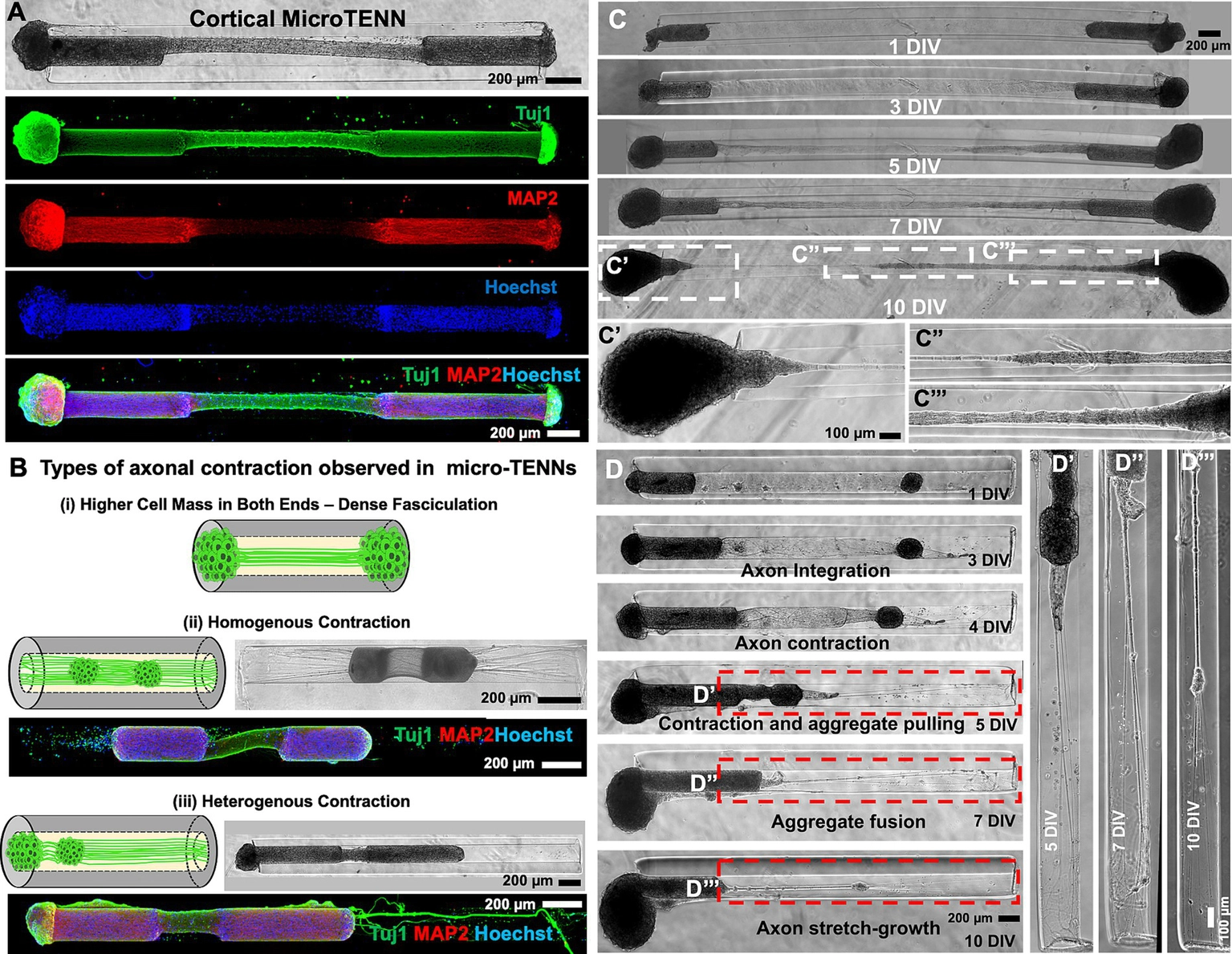
Cullen Lab cortical micro-TENNs with neuronal aggregates connected by bundled axonal tracts, documented in experimental microscopy.
2024 preclinical micro-TENN research construct, not a human implant.
Image credit & source
Chouhan, Gordián Vélez, Struzyna, Adewole et al., Frontiers in Molecular Neuroscience (2024), Figure 2 · Frontiers in Molecular Neuroscience · Figure 2 · CC BY 4.0.
Original complete research figure copied byte for byte to local storage; no crop, resizing or re-encoding. Original panels, annotations and scale bars retained.
- Code
- L2R
- Reviewed
- 2026-10-22
- Interface
- other
- Evidence stage
- preclinical
Independent, source-linked catalog sheet. Not a manufacturer-issued datasheet, regulatory decision or instructions for clinical use. Human evidence does not establish approval. Source-specific restrictions, conflicts and missing specifications are retained below.
UPenn micro-TENN living neural networks
Micro-tissue engineered neural networks (micro-TENNs) are the Cullen Lab’s implantable living micro-tissue constructs: discrete populations of neurons with long-projecting axons, built at microscale so they can be transplanted into the brain to reconstruct circuitry, modulate networks, or serve as biological relays. Distinct from the lab’s living electrode axon tracts, which are the interface-oriented subset of this platform.
Identity
| Field | Value and source scope |
|---|---|
| Device | Micro-tissue engineered neural networks (micro-TENNs) [1] |
| Developer | Cullen Lab, University of Pennsylvania [1][2] |
| Interface class | Biohybrid/tissue-engineered living construct [1] |
| Regulatory status | Research construct; no clearance |
| Function | Nervous system reconstruction, modulation and modeling [1] |
| Transplant into brain | Preformed micro-TENNs transplanted with biomaterial delivery strategies, preclinical [2] |