UPenn engineered axonal tract living electrodes
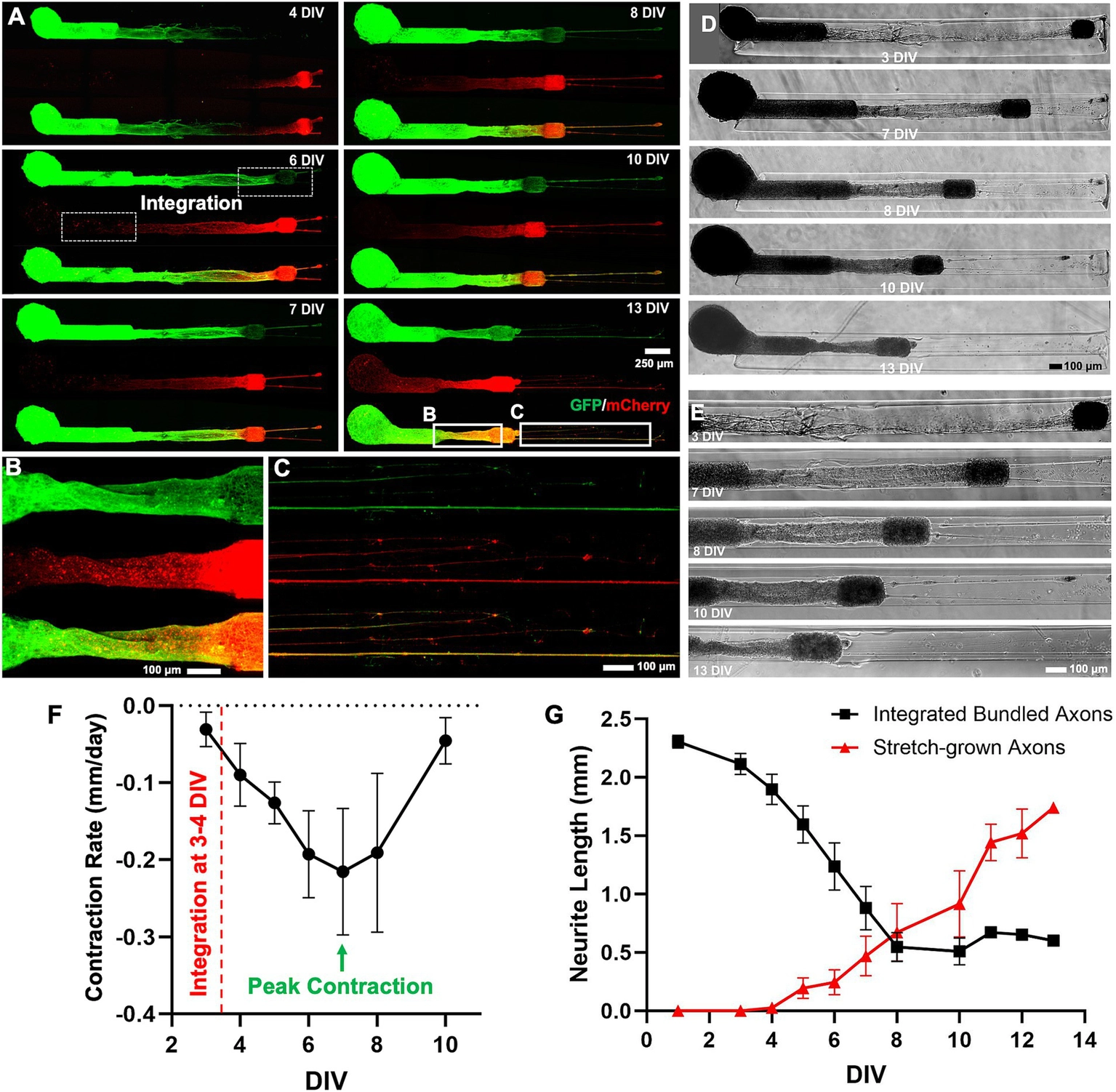
Living cortical micro-TENN with labeled neuronal aggregates and connecting axons; related experimental construct from the living-electrode research lineage.
Related 2024 Cullen Lab bidirectional micro-TENN experiment; not the specific unidirectional 'living electrode' pictured in the 2018 publication.
Image credit & source
Chouhan, Gordián Vélez, Struzyna, Adewole et al., Frontiers in Molecular Neuroscience (2024), Figure 4 · Frontiers in Molecular Neuroscience · Figure 4 · CC BY 4.0.
Original complete research figure copied byte for byte to local storage; no crop, resizing or re-encoding. Original panels, annotations and scale bars retained.
- Code
- L2R
- Reviewed
- 2026-10-22
- Interface
- other
- Evidence stage
- preclinical
Independent, source-linked catalog sheet. Not a manufacturer-issued datasheet, regulatory decision or instructions for clinical use. Human evidence does not establish approval. Source-specific restrictions, conflicts and missing specifications are retained below.
UPenn engineered axonal tract living electrodes
The Cullen Lab at the University of Pennsylvania develops biohybrid interfaces in which engineered axonal tracts serve as “living electrodes”: living biological conduits that interface with neural circuitry through synaptic mechanisms rather than metal contacts alone. The representative paper demonstrates synaptic-based modulation of neural circuitry with these constructs.
Identity
| Field | Value and source scope |
|---|---|
| Device | Engineered axonal tracts as “living electrodes” [1] |
| Developer | Cullen Lab, University of Pennsylvania [1] |
| Interface class | Biohybrid/tissue-engineered construct [1] |
| Regulatory status | Research construct; no clearance |
| Function | Synaptic-based modulation of neural circuitry [1] |
| Species studied | Preclinical [1] |