Axonova Medical tissue-engineered nerve graft
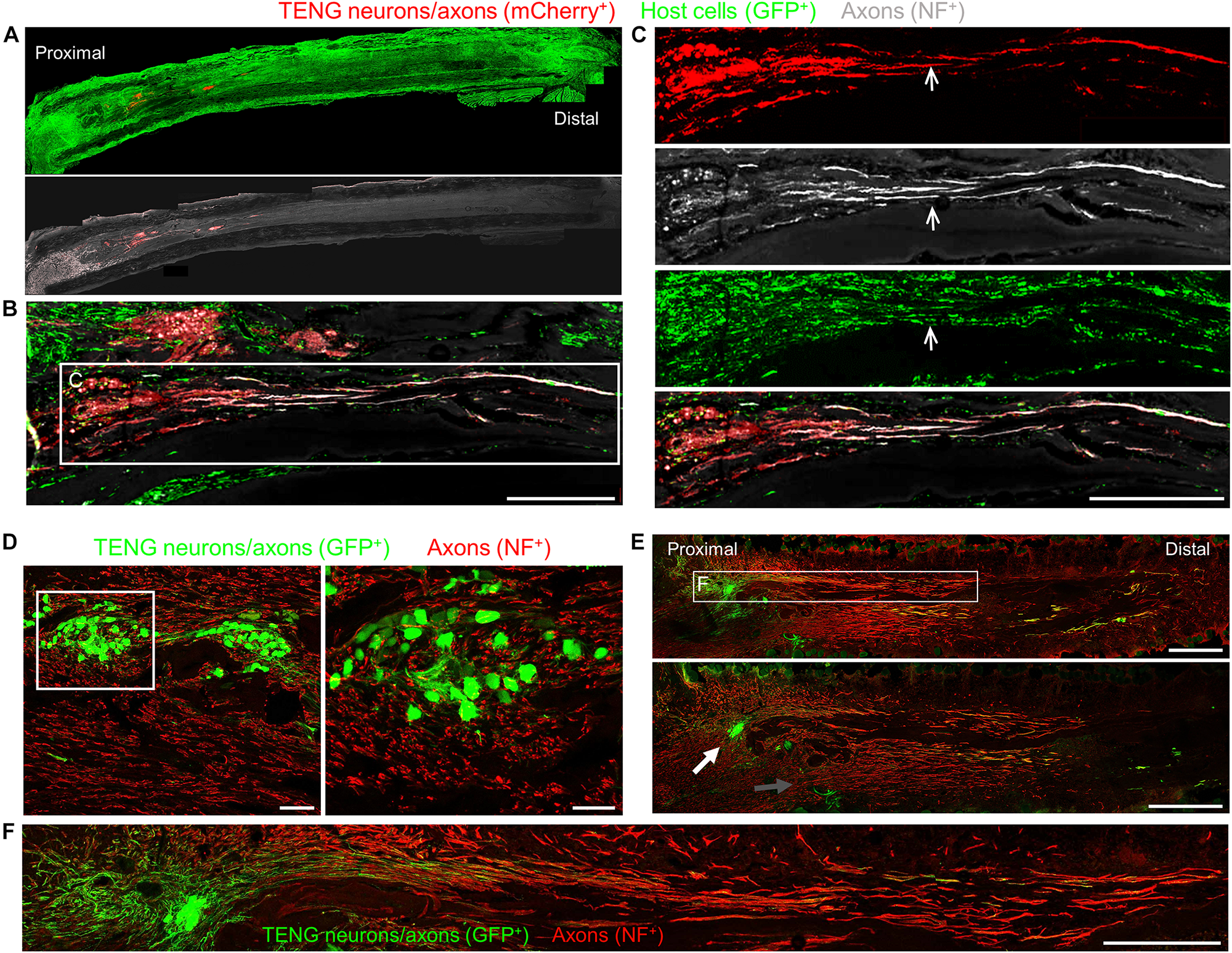
Tissue-engineered nerve-graft axons and regenerating host nerve tissue visualized by fluorescence microscopy in preclinical experiments.
Cullen Lab precursor tissue-engineered nerve graft, not a verified photograph of an Axonova commercial product.
Image credit & source
Katiyar, Struzyna, Morand, Burrell et al., Frontiers in Bioengineering and Biotechnology (2020), Figure 3 · Frontiers in Bioengineering and Biotechnology · Figure 3 · CC BY 4.0.
Original complete research figure copied byte for byte to local storage; no crop, resizing or re-encoding. Original panels, annotations and scale bars retained.
- Code
- ?2R
- Reviewed
- 2026-10-22
- Interface
- pni
- Evidence stage
- preclinical
Independent, source-linked catalog sheet. Not a manufacturer-issued datasheet, regulatory decision or instructions for clinical use. Human evidence does not establish approval. Source-specific restrictions, conflicts and missing specifications are retained below.
Axonova Medical tissue-engineered nerve graft
Axonova Medical, a University of Pennsylvania spin-out from the Cullen/Smith tissue-engineering program, develops tissue engineered nerve grafts (TENGs): living, aligned axon tracts spanning several centimeters, designed to grow axons over long, clinically relevant distances and guide their growth to the appropriate target tissue after peripheral nerve injury. Published biomanufacturing work describes producing axon-based TENGs at scale using porcine GalSafe neurons.
Identity
| Field | Value and source scope |
|---|---|
| Device | Tissue engineered nerve graft (TENG): living aligned axon tracts, several centimeters long [1] |
| Developer | Axonova Medical (UPenn spin-out) [1] |
| Interface class | Living peripheral nerve graft [1][2] |
| Regulatory status | None stated in the sources used here |
| Function | Restoration and guidance of axon regeneration after nerve injury [1] |
| Biomanufacturing | Scaled production from porcine GalSafe neurons reported [2] |