TUM custom 256-microelectrode BCI implant
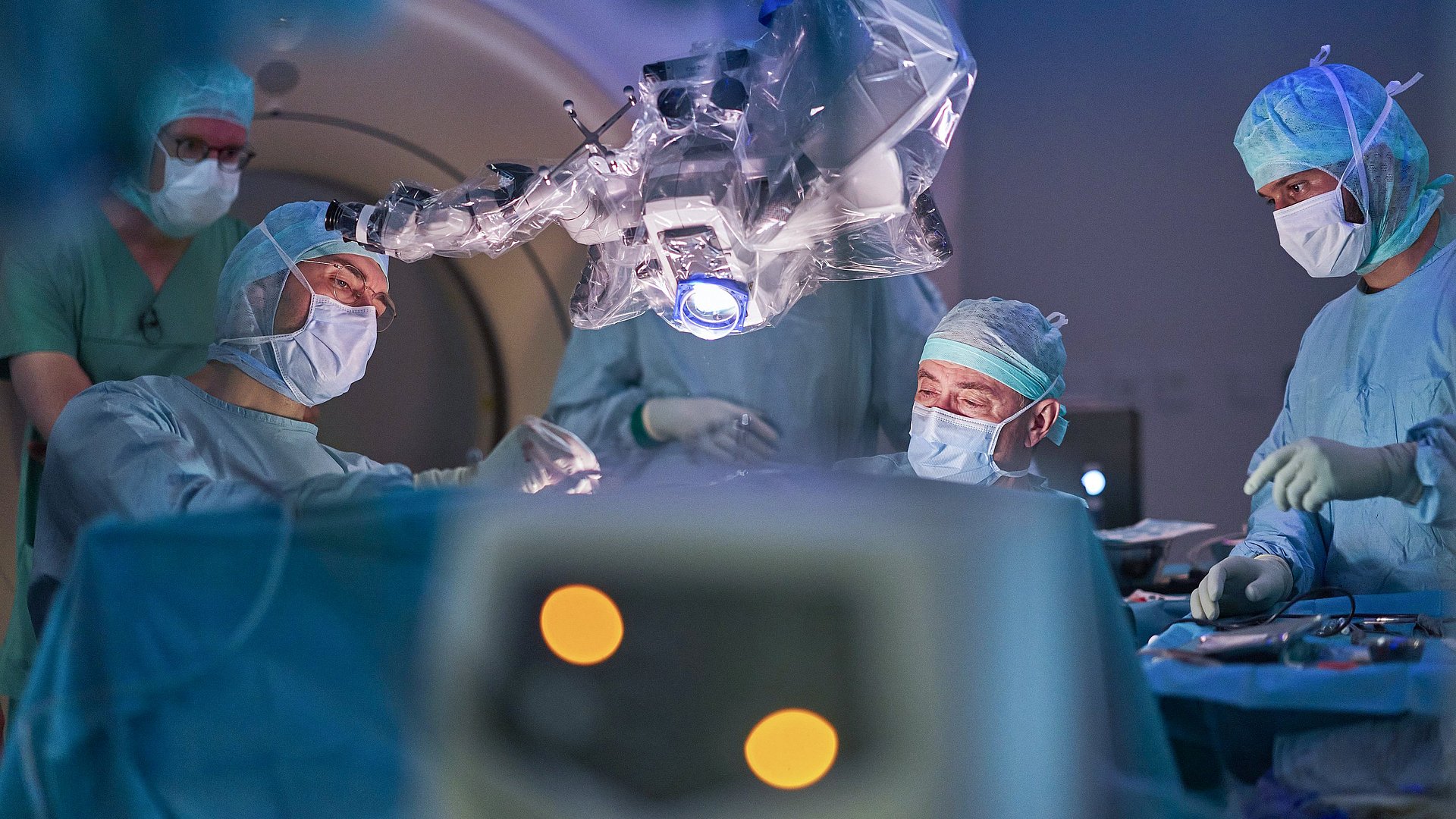
TUM surgical team implants the four-array, 256-microelectrode BCI in the clinical study participant; photographed during the original 2025 research procedure.
2025 TUM clinical implantation using four 64-channel Utah microelectrode arrays, not a close-up photograph of the implant. Permitted for reporting on this research project.
Image credit & source
Julia Bergmeister / TUM Klinikum · TUM University Hospital · Project press photograph · Project-specific editorial reuse with photographer credit.
Original source photograph copied byte for byte to local storage; no crop, resizing or re-encoding. Source credit retained.
- Code
- ?3?
- Reviewed
- 2026-10-22
- Interface
- intracortical
- Evidence stage
- human
Independent, source-linked catalog sheet. Not a manufacturer-issued datasheet, regulatory decision or instructions for clinical use. Human evidence does not establish approval. Source-specific restrictions, conflicts and missing specifications are retained below.
TUM custom 256-microelectrode BCI implant
A team at Technical University of Munich (TUM) University Hospital implanted a custom BCI with 256 microelectrodes in a patient with quadriplegia, in a surgery lasting more than five hours. NeuroNews International reported it as the first procedure of this kind performed in Europe (their framing). The electrodes capture signals from an area involved in planning and executing grasp movements; the goal is smartphone control and eventually robotic-arm control, with ongoing twice-weekly sessions to train AI decoders.
Identity
| Field | Value and source scope |
|---|---|
| Device | Custom BCI implant with 256 microelectrodes [1] |
| Developer | TUM University Hospital team [1] |
| Interface class | Microelectrode array over grasp movement planning/execution areas [1] |
| First human implant | Reported by NeuroNews International as Europe’s first such procedure (date not restated here) [1] |
| Regulatory status | Not stated in the sources used here |
| Function | Recording for decoding [1] |
| Intended control targets | Smartphone, then robotic arm [1] |
Notes
- Single trade-press source; no peer-reviewed data published yet. Signal characteristics and control metrics are not public.