ABILITY Neurotech fully implantable communication BCI
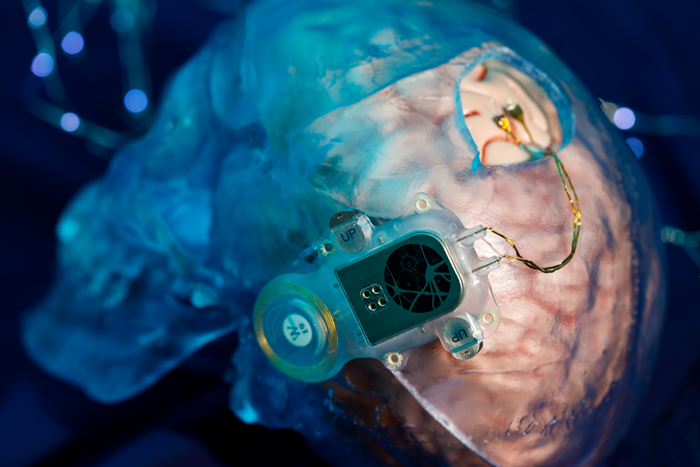
ABILITY neural-recording platform displayed on a transparent cranial model during its Wyss Center development program.
2022 research demonstration of ABILITY; not documented as the 2026 first-in-human hardware configuration. Image must remain unaltered. Site must remain noncommercial for licensed use.
Image credit & source
© Wyss Center for Bio and Neuroengineering, ABILITY implantable neural recording system, via EurekAlert! (2022) · EurekAlert! · Wyss Center ABILITY image · CC BY-NC-ND 4.0.
Original source photograph copied byte for byte to local storage; no crop, resizing or re-encoding. Source credit retained.
- Code
- C3R
- Reviewed
- 2026-10-22
- Interface
- ecog
- Evidence stage
- human
Independent, source-linked catalog sheet. Not a manufacturer-issued datasheet, regulatory decision or instructions for clinical use. Human evidence does not establish approval. Source-specific restrictions, conflicts and missing specifications are retained below.
ABILITY Neurotech fully implantable communication BCI
ABILITY Neurotech (Geneva, Campus Biotech) is developing a fully implantable communication BCI for people with severe paralysis. Per the company’s study page, the implant captures neural activity through 4 electrode arrays on the brain surface and wirelessly transmits it for decoding into computer commands. Trade press reported the wireless link as optical.
Identity
| Field | Value and source scope |
|---|---|
| Device | Fully implantable communication BCI (company name for the implant not stated) [1] |
| Manufacturer | ABILITY Neurotech, Geneva, Switzerland [1] |
| Interface class | Cortical surface: 4 electrode arrays on the brain surface [1] |
| Wireless link | Reported as optical (trade press) [2] |
| First human implant | Reported by trade press Oct 12-13, 2026; the company’s own study page confirms recruiting but does not state an implant date [1][2] |
| Regulatory status | Investigational; clinical study with Medical Research Ethics Committee approval [1] |
| Function | Recording for communication decoding [1] |
| Intended population | Severe paralysis with speech problems (traumatic brain injury, stroke, neurodegenerative or neuromuscular disease including ALS) [1] |